01
Choose the silhouette
Loafers create an easy, low-profile line; lace-ups bring more structure and adjustability. Consider trouser width, occasion and how formal you want the overall shape to feel.
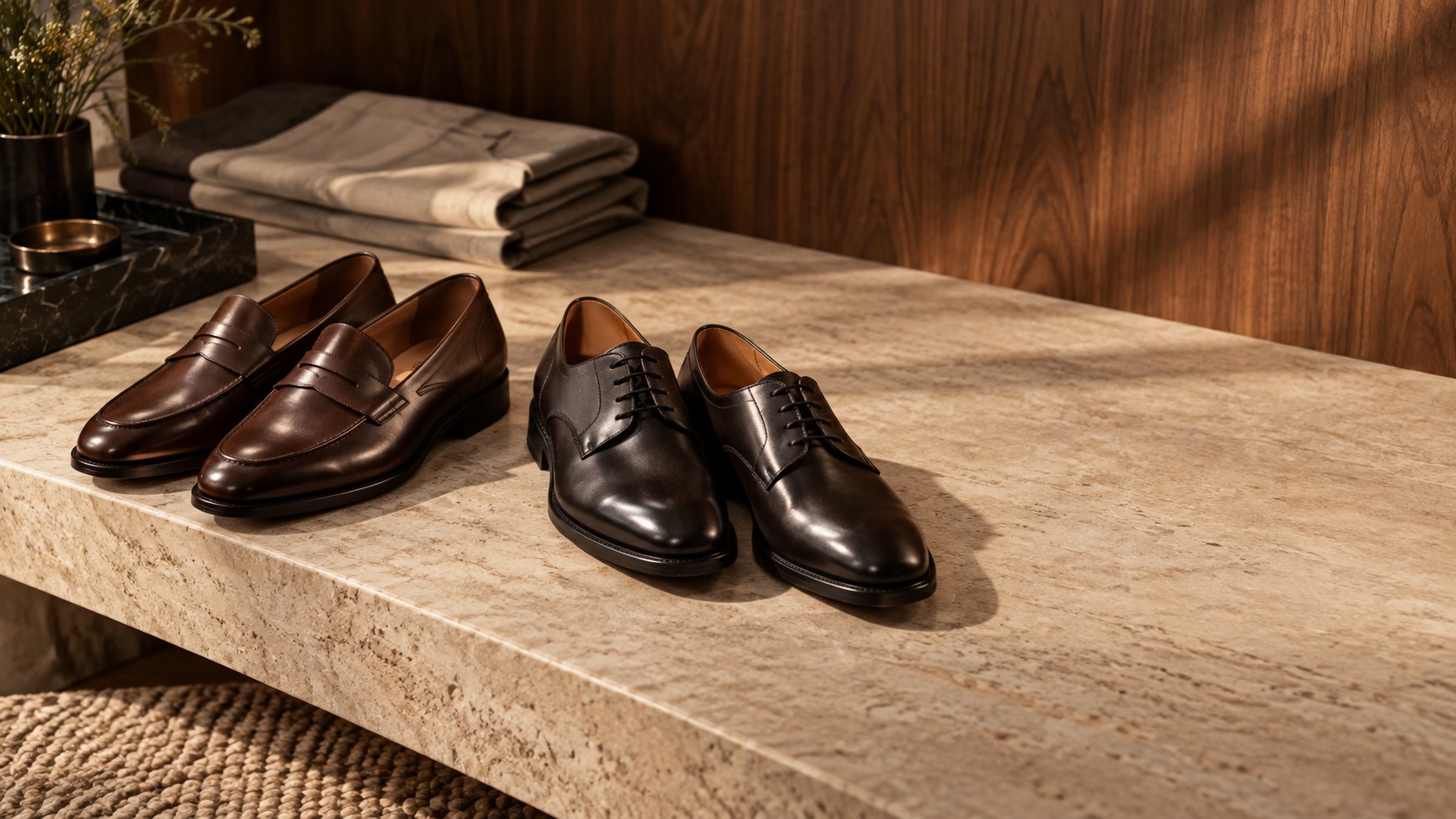
From easy driving loafers to polished derby shoes, the right pair begins with shape, leather character and the way you plan to wear it.
Explore the guideLoafers create an easy, low-profile line; lace-ups bring more structure and adjustability. Consider trouser width, occasion and how formal you want the overall shape to feel.
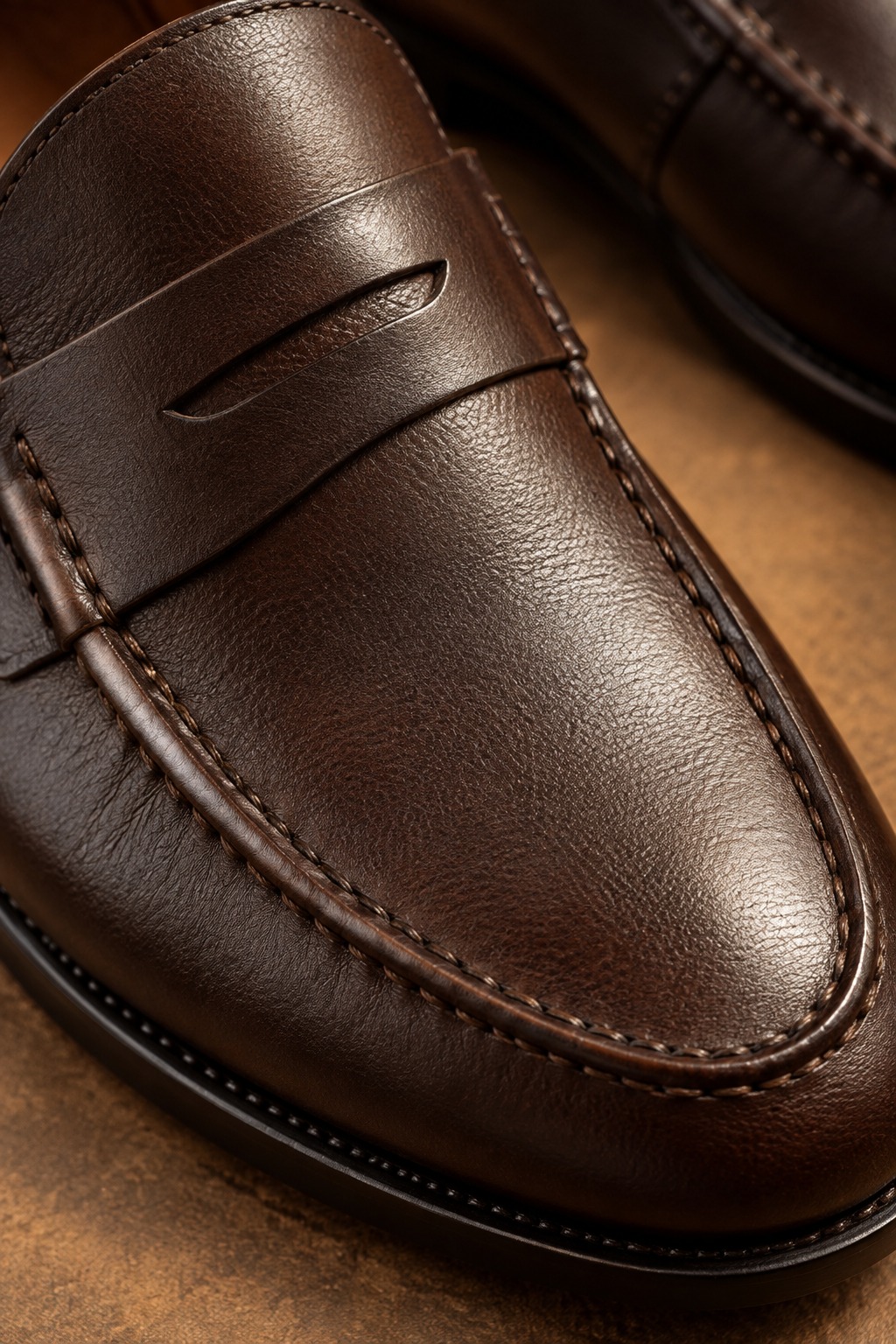
Natural grain, stitching and edge finishing give a shoe its visual character. Smooth leather reads polished, while softer finishes feel relaxed. Expect material variation rather than artificial uniformity.
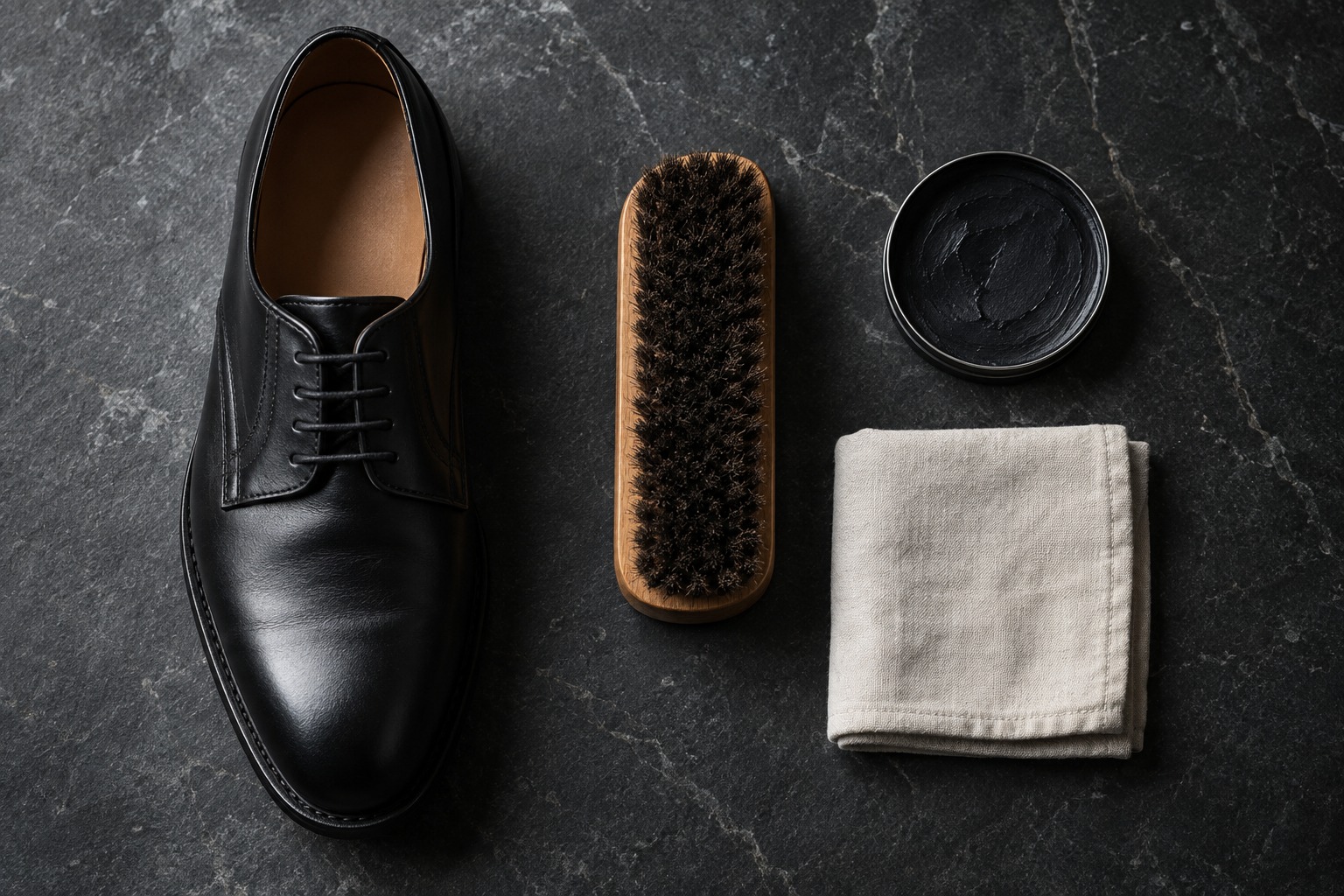
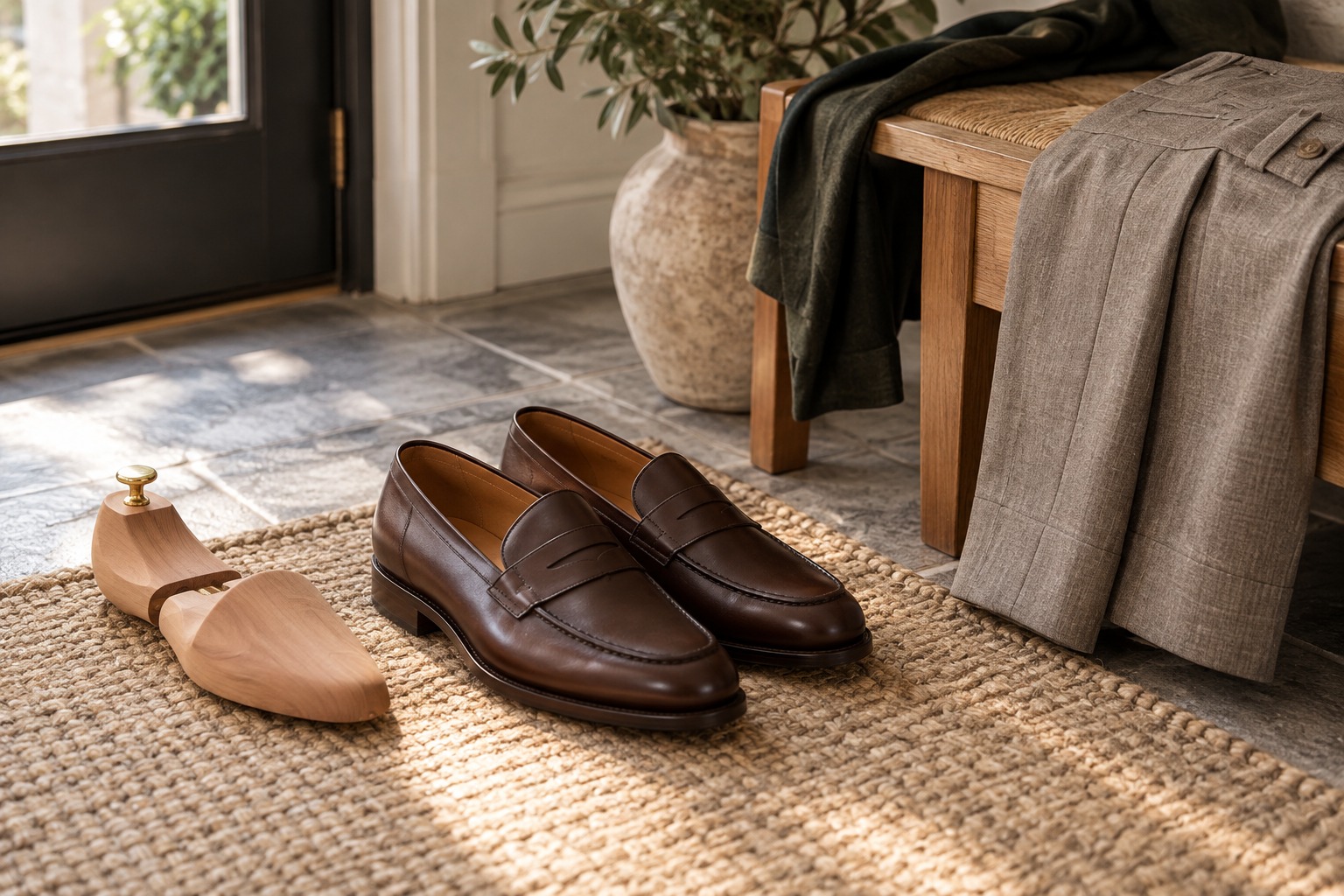
Let shoes rest, brush away surface dust and use care products suited to the leather type. Shoe trees can help maintain shape between wears; always follow the item-specific instructions.
Loafers slip on and create a relaxed profile. Derby shoes lace for adjustable hold and usually read more structured.
Natural material can show subtle variation in grain and tone; this is part of its character.
Allowing a pair to air and recover between wears can help it keep its shape and feel fresh.